Hard to believe, but Toyen, the subject of my book Magnetic Woman: Toyen and the Surrealist Erotic (University of Pittsburgh Press, 2020) turns 120 today. Toyen was born at 6pm Central European time, so this post will go up just a little bit before that.
Toyen was born in Prague (or technically Smíchov, which wasn't yet incorporated into Greater Prague then) and joined the avant-garde Devětsil group in 1923 with her friends the fellow artists Jindřich Štyrský and Remo. She and Štyrský later became founding members of the Prague surrealist group; they were among the most significant Czech artists of the first half of the twentieth century, a period when Czechoslovakia was a hotbed of artistic, literary, theatrical, and musical creativity. While Štyrský did not survive the Second World War (his health was poor), Toyen helped hide a surrealist of Jewish descent, Jindřich Heisler, from the Nazis and the two later moved to Paris to join the surrealist group there.
You can listen to a New Books Network podcast episode in which John Raimo interviews me about Toyen. I'll also be presenting a paper on Toyen at the 2022 SECAC conference in October.
Showing posts with label modernism. Show all posts
Wednesday, September 21, 2022
Thursday, June 9, 2022
Talk on Toyen at the High Street Gallery Today!
Yes, I've still got events happening for Magnetic Woman: Toyen and the Surrealist Erotic! This evening at 7pm I'll be giving a talk about Toyen at the High Street Gallery in Dayton, Ohio, home of the Dayton Society of Artists.
Copies of both books will be available for sale at the talk.
Thursday, April 14, 2022
Magnetic Woman Expands its International Reach
Through the magic of Worldcat, and the Polish NUKAT (Union Catalog of Polish Research Libraries), I see that a copy of Magnetic Woman can now be found in Łódź at the Biblioteka Uniwersytetu Łódzkiego!
This is in addition to library copies in the British Isles (Maynooth, Fife, London), elsewhere in continental Europe (Paris, Leioa in Spain's Basque country, Barcelona, Lausanne, Berlin, Stockholm, Munich, Heidelberg, Würzburg, Zürich), and Wellington, New Zealand. This is in addition to copies at many US university and public libraries and one in Montreal.
While I've sent copies to a good many Czech institutions, apparently none of them report to Worldcat.
If your library doesn't yet have Magnetic Woman, do ask them to order it! You can point out that it is a prize-winning study of a fascinating gender-ambiguous surrealist. And if you've read it, please consider reviewing it, whether for a scholarly journal or on Amazon or Goodreads!
Spread the word about Toyen and Czech surrealism!
Saturday, January 8, 2022
One More Day to Get MAGNETIC WOMAN on Sale
Don't forget, University of Pittsburgh Press is having a 30% off sale on all titles through January 9, 2022! This means you can order Magnetic Woman: Toyen and the Surrealist Erotic for just $70. Go to https://upittpress.org/books/9780822946472/ and in your order use the code PITTBOOKS. But hurry, the sale is nearly over!
Friday, December 31, 2021
Get Magnetic Woman on Sale!
Guess what! University of Pittsburgh Press is having a 30% off sale on all titles! This means you can order Magnetic Woman for just $70 until January 9, 2022. Go to https://upittpress.org/books/9780822946472/ and in your order use the code PITTBOOKS.
Friday, August 13, 2021
Yes, There's a Big Toyen Retrospective
Those who follow matters surreal or Czech or artistic closely might be aware that there is a major Toyen retrospective currently on view in Prague. It's called, bilingually, Toyen: Snící rebelka / Toyen: The Dreaming Rebel, and it is curated by Anna Pravdová, Annie Le Brun, and Annabelle Görgen-Lammers.
Naturally, back when the show was in the planning stages, there was no reason to imagine that a global pandemic would hit a year before the opening and still be afflicting world health and world travel in 2021. I hate to think how the curators and their colleagues must have agonized during the past year, wondering whether the show would indeed open on time in April or what. Publishing a book during a pandemic is stressful enough, but the uncertainties of book launching and promotion certainly pale in comparison to the anxieties surrounding putting together a large multi-venue exhibition.
Fortunately, the show did open, but with very limited attendance allowed due to health restrictions. I spent most of my summer break waiting to see if the Czech Republic would let in American tourists, and as soon as I got the good word, I was booking my flight. I was afraid that if I didn't book right away and leave as soon as possible, the pandemic might go wild again (which it already pretty much has, although I think it is still possible to fly from the US and be allowed into the Czech Republic).
My stay in Prague was extremely short and coincided with some insanely humid weather (cool temperatures that were nonetheless scarcely bearable due to the humidity) which I'm sure connected to the terrible rains and flooding in western Germany. However, I did get to see the exhibition twice, as well as going to a few other things and meeting up with a very small number of people. I can also report that although the Czech Republic has its anti-vaxxers, the population of Prague was very diligent about masking in indoor spaces, which was a relief after so much neglect of masking back in the US.
In any case, the exhibition was absolutely gorgeous, beautifully displayed. Totally worth seeing more than once! Of course, as a Toyen scholar I did have some criticisms, which you can learn about in my review of the show for the CRAACE website's blog (CONTINUITY/RUPTURE: ART AND ARCHITECTURE IN CENTRAL EUROPE 1918-1939), but for the most part they don't relate to the experience of viewing the art.
So if you can see this show when it moves on to Hamburg or Paris, by all means do so. I also heard (long ago) that it would come to Chicago, but I haven't been able to verify that that is still going to happen. Let's hope so.
National Gallery Prague, Waldstein Riding School, 9 April to 22 August 2021 (sold out)
Hamburger Kunsthalle, 24 September 2021 to 13 February 2022
Musée d’Art Moderne de Paris, 25 March to 24 July 2022
Sunday, July 4, 2021
50 Classic Short Novels I've Read (or Not)
This morning, waking up early to cough a week or so after I thought I'd shaken a minor unidentified ear-nose-throat virus (it began in my ear), I chanced to see what sort of news my smartphone had to offer. I try to avoid doing this, but like many things in life, it's an addictive practice and admittedly provides me with a fine array of news not just about covid-19 and the ex-president, but about Stonehenge, ancient hominins, camping, fungus-infected ants preserved in amber, and advice columns by at least three different people.
Of late it's been offering up a lot of literary and writer-oriented stuff, and so this morning I found myself devouring a list on Lithub of short novels (under 200 pages) written before 1970.
Now, although I am trying very hard to read fiction by current authors, I'm more the kind of reader who goes for underappreciated gems that have nonetheless passed the test of time. It's no surprise that I'm a historian of modern rather than contemporary art. Anyway, while as the list-maker (Emily Temple) admits, it's sort of a white-male-dominated list, it's still an exciting list and I was thrilled to see so many familiar and new titles.
I'm going to break up the list into what I've read, what I've meant to read (or at least knew of), and what I've never heard of.
Read
Adolfo Bioy Casares, The Invention of Morel: The list began with this! I'm stunned. I read this just after graduating from college, when I was interning at an experimental theater and checking out books from the Mill Valley public library. I read a lot that summer, most of it pretty famous (from Joyce's Ulysses to all of Raymond Chandler).
Arthur Conan Doyle, The Hound of the Baskervilles: Not sure how old I was when I read this. High school? Junior high? Grade school?I read all of the Sherlock Holmes stories at least once. Probably ought to read them again.
Italo Calvino, The Cloven Viscount: Ah, what a delight. I discovered Italo Calvino just before starting college, thanks to (of all things) a book review in Time. I really need to reread this. It's been too long. I love Italo Calvino.
Richard Brautigan, In Watermelon Sugar: Did I read this in high school or in college? I read a fair amount of Brautigan and Kurt Vonnegut all around the same time. It's what we did in the 1970s.
Thomas Mann, Death in Venice: First read this in 1980, for a class. I read it while sunbathing nude in a meadow, which I put into the pandemic novella I wrote last year because such things belong in fiction. Of course, it could be argued that I should have read it at the beach instead. It's the kind of thing I would read at the beach if I hung out at beaches. Grim, diseased, with long sentences.
Shirley Jackson, We Have Always Lived in the Castle: Probably read this in high school. The Haunting of Hill House was the Shirley Jackson I read many times as a child, but I read other Shirley Jackson books in high school.
Françoise Sagan, Bonjour Tristesse: I read this in junior high or high school, probably the latter. My recollection of it is not all that clear; time to reread.
Franz Kafka, The Trial: First read this in high school, when I devoured Kafka.
Djuna Barnes, Nightwood: I believe I picked this up in or just after college. Another of those curiously influential books twisting my mind.
Jean Rhys, Wide Sargasso Sea: I love Jean Rhys, but this is my least favorite of her books. I've only read it once. I did give my mother a copy since she loved Jane Eyre, but I have no idea what my mother thought of this take on the characters.
Muriel Spark, The Girls of Slender Means: Guessing that I first read this is my twenties, when I read practically every Muriel Spark novel that then existed (and which all, in the library copies, showed Spark in what seemed a bizarrely outdated and extravagant style of hair and makeup). These days I read this and several other Spark novels frequently and do not read certain of the others at all.
F. Scott Fitzgerald, The Great Gatsby: I suppose I must have first read this in high school, back when I was somewhat baffled by the idea of someone's voice sounding like money. Like coins? Like paper money? I wasn't sure.
Vladimir Nabokov, Pnin: Curiously, this is one I only read quite recently, and enjoyed it. I haven't read all that much Nabokov. I always enjoy The Real Life of Sebastian Knight; I liked Lolita well enough back in my teens or twenties but found it rather horrifying more recently; I was not that wild about Ada.
Anthony Burgess, A Clockwork Orange: Read this in college, or possibly high school. I know I saw the movie in college. The invented slang intrigued me.
Meant to Read Someday, or Knew Of, or Read Others by the Author
John Steinbeck, Of Mice and Men: Never got around to this; read The Red Pony and The Grapes of Wrath.
George Orwell, Animal Farm: Yeah, I know I should. And it almost seems like maybe I did.
James M. Cain, The Postman Always Rings Twice: I am pretty sure I somehow missed this.
Nella Larsen, Passing: Knew of this because I read Jessie Redmon Fauset's Plum Bun, which gets discussed in relation to Passing.
Albert Camus, The Stranger: Somehow never got around to it.
Kate Chopin, The Awakening: Started it in high school, apparently got distracted and didn't finish it.
Leo Tolstoy, The Death of Ivan Ilyich: I have no idea why I haven't read any Tolstoy yet. Wait, I did read something he wrote on art, thinking I might assign it to students.
Christopher Isherwood, A Single Man: I read an awful lot of Isherwood in high school, but not this one. Saw the movie.
Fyodor Dostoevsky, Notes from Underground: Read a lot of Dostoevsky in junior high, but I don't think this was among them. Could be wrong.
Anna Kavan, Ice: I've read other works by Kavan, but never heard of this one.
Jean Toomer, Cane: I've known who Jean Toomer was for ages, but never looked for or run across his books.
Knut Hamsun, Hunger: Ought to read it, haven't yet.
James Baldwin, Giovanni's Room: Unsure why I haven't ended up reading any James Baldwin yet.
Willa Cather, O Pioneers! One of those books my mother read growing up that I haven't gotten to yet. I did read at least one Cather short story long ago.
Herman Melville, Billy Budd. Didn't realize this was short. Moby Dick has been on my to-read list.
Thomas Pynchon, The Crying of Lot 49: Not sure why I didn't read any Pynchon back in my twenties.
George Eliot, Silas Marner: This always sounded like something that might bore me.
Truman Capote, Breakfast at Tiffany's: This might be a nice antidote to In Cold Blood, which I've read at least twice. Saw the movie on an airplane shortly before the pandemic, oddly enough.
Chinua Achebe, Things Fall Apart: Have heard this is good (I mean, before reading the LitHub list).
N. Scott Momaday, House Made of Dawn: Know of the author, haven't yet read him.
Philip K. Dick, Ubik: Read a few others by Dick and mostly enjoyed them; not this one yet.
Clarice Lispector, Near to the Wild Heart: Read one of her books in my twenties and have never run across any others. The one I read was destroyed by salt water and I'm baffled as to which one it was.
Zora Neale Hurston, Their Eyes Were Watching God: Keep meaning to read this...
Edith Wharton, Ethan Frome: One of those books that I suspected would be dull and so have not read.
Joan Lindsay, Picnic at Hanging Rock: Saw the movie, didn't know it was based on a book.
Angela Carter, The Magic Toyshop: OK, I know I should read Carter's fiction as well as her nonfiction...
Somehow Completely Off My Radar
Juan Rulfo, Pedro Páramo
James Weldon Johnson, The Autobiography of an Ex-Colored Man
J.G. Ballard, The Drowned World
Kenzaburo Oe, A Personal Matter
Yasunari Kawabata, Snow Country
Robert Walser, Jakob von Gunten
Leonard Gardner, Fat City
Chester Himes, If He Hollers Let Him Go
Charles Portis, Norwood
Barbara Comyns, Who Was Changed and Who Was Dead
Readers are invited to add to the list (not doubling up on authors). A quick look at my shelves didn't offer much. I was surprised that my copy of Heinrich Böll's The End of a Mission was slightly over 200 pages, and I forgot to check if it was pre-1970 (it is). Giorgio Bassani's The Garden of the Finzi-Continis is just under 200 pages. I lost a lot of books to salt water, long ago.
Labels:
amusements,
books,
fiction,
modernism,
observations,
reading
Friday, April 16, 2021
Toward a Concrete Utopia
Not precisely a new book at this point, but Toward a Concrete Utopia: Architecture in Yugoslavia, 1948–1980, edited by Martino Stierli and Vladimir Kulić, was just awarded the Society of Architectural Historians 2021 Exhibition Catalogue Award. Kudos to the editors and authors!
I regret to say it looks like this is no longer available from MOMA's design shop, but you can still get it on Amazon (for a high price).
Monday, March 1, 2021
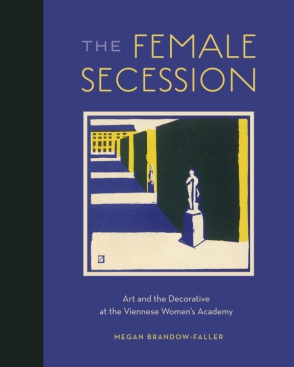
The Female Secession
Is it great or is it a bit sad that so many interesting books are coming out during the pandemic? I really don't know--on the one hand there is plenty to read (for anyone who has time, which many of us don't really just now), and on the other hand it's harder to promote books when we can't meet in person and often we just feel that the last thing we want to see is another Zoom-type event.
Nonetheless, here's another want-to-have title for those of us who study art/design history, Central Europe, and/or women's/gender history! Megan Brandow-Faller's The Female Secession: Art and the Decorative at the Viennese Women’s Academy traces the history of the women’s art movement in Secessionist Vienna from its origins in 1897, at the Women’s Academy, to the Association of Austrian Women Artists and its radical offshoot, the Wiener Frauenkunst and "draws a direct connection to the themes that impelled the better-known explosion of feminist art in 1970s America." I know I want to learn more!
Click here for more information and to order your copy.
Friday, January 15, 2021
Open Plan: A Design History of the American Office
Another intriguing book by a scholar of my acquaintance is Open Plan: A Design History of the American Office, by Jennifer Kaufmann-Buehler. Jennifer is a design historian and has long been fascinated by the utopian but now-despised open office. She " traces the history and evolution of the American open plan from the brightly-colored office landscapes of the 1960s and 1970s to the monochromatic cubicles of the 1980s and 1990s," and analyzes both the original architectural intentions and how workers have actually experienced these spaces. (I can affirm that working in a gray cubicle during much of my early adulthood was not a pleasant experience.)
I love her book cover! You can read more about the book and order it here.
Saturday, January 9, 2021
Photofascism
Another new book of interest is Vanessa Rocco's Photofascism: Photography, Film, and Exhibition Culture in 1930s Germany and Italy, published by Bloomsbury. As the publisher points out,
"The 1930s provides a potent case study for every generation, and it is as urgent as ever in our global political environment to deeply understand the central role of visual imagery in what transpired. Photofascism demonstrates precisely how dictatorial regimes use photographic mass media, methodically and in combination with display, to persuade the public with often times highly destructive-even catastrophic-results."
This is an important study and should be of considerable interest to both scholars and the wider public, given the present rise of authoritarian-tending regimes in many parts of the world.
Friday, January 8, 2021
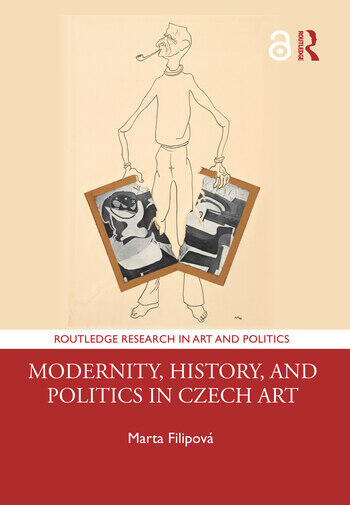
Modernity, History, and Politics in Czech Art
Returning to my shout-outs to interesting and important books by friends and colleagues, I must mention Marta Filipová's recent book Modernity, History, and Politics in Czech Art, published by Routledge in 2020 (it actually appeared in 2019, in a reversal of the more usual phenomenon of a book coming out after its copyright date).
While I have a review of Marta's excellent book forthcoming in Austrian History Yearbook, Cynthia Paces has written a much more in-depth review in the Journal of Art Historiography than I had space for, so please take a look at that!
Labels:
art,
book reviews,
books,
Czech,
friends,
modernism,
scholarly journals
Friday, December 18, 2020
New Journal Founded: Art East/Central
Art East/Central is a new English-language, open access, peer-reviewed journal that will publish original articles on architecture, design and the visual arts in Central and East-Central Europe 1800 to the present. It will also feature book and exhibition reviews, reports, and occasional discussion forums. An international editorial board and a rigorous, double-blind peer review process are intended to ensure the high quality and originality of the contents.
"We welcome your submissions to be considered for future issues at journal@arteastcentral.eu. We are particularly interested in contributions that adopt a transnational approach, examining practices, ideas and traditions that cross the political, linguistic, ethnic, and cultural boundaries of the region. Interdisciplinary approaches, as well as reflection on the particular challenges this region raises for relevant academic practices, are also encouraged. Submissions from graduate students are welcome."
Published by CRAACE (CONTINUITY/RUPTURE: ART AND ARCHITECTURE IN CENTRAL EUROPE 1918-1939), the first issue is expected to be out in early 2021. Check here to find it.
Tuesday, December 15, 2020
Haunted Bauhaus
I'm thrilled to report that my pal and mentor Elizabeth Otto's recent book Haunted Bauhaus: Occult Spirituality, Gender Fluidity, Queer Identities, and Radical Politics, has won the Northeast Popular & American Culture Association’s 2020 Peter C. Rollins Book Prize, awarded annually for innovative scholarship in the fields of American and popular culture by a writer living or working in New York or New England.
The author says, “Throughout Haunted Bauhaus, I sought to show how this art movement was bound up with pressing issues of its own time, that it was more of a movement to reform daily life that drew ideas from its surrounding cultural context than many knew. At the same time, I emphasize how many of the ideas being hashed out at the Bauhaus – on spirituality, gender, sex and politics – are close to ideas we are still grappling with.”
You can read more about the book, its author, and the prize here.
Saturday, December 12, 2020
Marking Modern Movement
I've just learned that Susan Funkenstein's Marking Modern Movement: Dance and Gender in the Visual Imagery of the Weimar Republic is now available from University of Michigan Press! I can recommend this, as not only do I know Susan (I sat in on her Design History course when I was in grad school and we run into each other every now and then) but her PhD dissertation was useful to me in thinking about the importance of modern dance in Czech modernism and Czech feminism.
You can read more about it here, and you can get this book in any of three formats:
Paper | 6 x 9 | 342pp. 49 B&W Images, 28 Color Images, 1 Table.
ISBN 978-0-472-05461-9 | $39.95
Hardcover | 6 x 9 | 342pp. 49 B&W Images, 28 Color Images, 1 Table.
ISBN 978-0-472-07461-7 | $85.00
Also available in ebook.
Save 30% by using promotion code UMFUNKENSTEIN at press.umich.edu before 12/31/20.
Labels:
art,
books,
dance,
friends,
gender,
German,
illustration,
modernism,
publishing
Subscribe to:
Posts (Atom)