One of the lovely things about being a debut novelist (or even a more seasoned novelist) these days is that many other writers offer a helping hand in getting the word out. This can mean tweets or posting on Instagram; it can also mean announcing book launches (that's been my big contribution this year) or blogging short interviews. So far I've had the privilege of being interviewed by novelists Clifford Garstang, Sarahlyn Bruck, Christina Consolino, and now historical fiction writer Betty Bolté, with one by author Joy E. Held coming up next month as well as a podcast segment with Yvonne Battle-Felton.
While there are some questions that almost every interviewer will ask, it's fun to see what new perspectives different interviewers will have and also to think how I can get across the spirit of my book without saying the same thing every time.
That said, here's what Betty asked me and how I answered!
Betty's focus in historical fiction is on American history, typically including romance and a touch of the supernatural; she cites Henry James and Edgar Allan Poe as classic authors she particularly admires.
Showing posts with label blogs. Show all posts
Saturday, July 23, 2022
Thursday, May 12, 2022
Two and a Half Weeks till Launch!
It's hard to believe, but it's now just two and a half weeks until In Search of the Magic Theater launches. On June 1st all the pre-orders will be shipped out and we'll be having a festive launch party at the Ghostlight cafe on Wayne in Dayton, Ohio. There'll be a blog tour courtesy of TLC Book Tours and lots of other fun stuff to come.
Through the voices of two women with overlapping lives but diverging paths, Karla Huebner explores the tension between control and surrender, reason and ecstasy, dreaming and choosing. This engaging, erudite, yet accessible novel takes us on a cultural journey spanning millennia, from Greek mythology to Jimi Hendrix, from Elizabethan lyric poetry to performance art, revealing along the way the joy of self-discovery. –Julie Wittes Schlack, author of This All-at-Onceness
Friday, August 13, 2021
Yes, There's a Big Toyen Retrospective
Those who follow matters surreal or Czech or artistic closely might be aware that there is a major Toyen retrospective currently on view in Prague. It's called, bilingually, Toyen: Snící rebelka / Toyen: The Dreaming Rebel, and it is curated by Anna Pravdová, Annie Le Brun, and Annabelle Görgen-Lammers.
Naturally, back when the show was in the planning stages, there was no reason to imagine that a global pandemic would hit a year before the opening and still be afflicting world health and world travel in 2021. I hate to think how the curators and their colleagues must have agonized during the past year, wondering whether the show would indeed open on time in April or what. Publishing a book during a pandemic is stressful enough, but the uncertainties of book launching and promotion certainly pale in comparison to the anxieties surrounding putting together a large multi-venue exhibition.
Fortunately, the show did open, but with very limited attendance allowed due to health restrictions. I spent most of my summer break waiting to see if the Czech Republic would let in American tourists, and as soon as I got the good word, I was booking my flight. I was afraid that if I didn't book right away and leave as soon as possible, the pandemic might go wild again (which it already pretty much has, although I think it is still possible to fly from the US and be allowed into the Czech Republic).
My stay in Prague was extremely short and coincided with some insanely humid weather (cool temperatures that were nonetheless scarcely bearable due to the humidity) which I'm sure connected to the terrible rains and flooding in western Germany. However, I did get to see the exhibition twice, as well as going to a few other things and meeting up with a very small number of people. I can also report that although the Czech Republic has its anti-vaxxers, the population of Prague was very diligent about masking in indoor spaces, which was a relief after so much neglect of masking back in the US.
In any case, the exhibition was absolutely gorgeous, beautifully displayed. Totally worth seeing more than once! Of course, as a Toyen scholar I did have some criticisms, which you can learn about in my review of the show for the CRAACE website's blog (CONTINUITY/RUPTURE: ART AND ARCHITECTURE IN CENTRAL EUROPE 1918-1939), but for the most part they don't relate to the experience of viewing the art.
So if you can see this show when it moves on to Hamburg or Paris, by all means do so. I also heard (long ago) that it would come to Chicago, but I haven't been able to verify that that is still going to happen. Let's hope so.
National Gallery Prague, Waldstein Riding School, 9 April to 22 August 2021 (sold out)
Hamburger Kunsthalle, 24 September 2021 to 13 February 2022
Musée d’Art Moderne de Paris, 25 March to 24 July 2022
Monday, May 31, 2021
All the Stats About Middle-Grade Books
Now that I've begun, in my kooky way, a novel for kids rather than yet another book for adults, I wanted to see what kind of word count I ought to be aiming for. After all, while I read huge numbers of children's books growing up and occasionally still read some, this is not an area of publishing that I've really followed.
Well, I found that middle-grade books tend to be somewhere in the 40,000 to 69,000 word range, which sounds just right for what I'm expecting to end up with. But I also found out a whole lot more.
Children's author Hannah Holt has compiled an amazing and incredibly useful set of statistics about middle-grade authors and their books. While for some things it would be nice to have a larger author sample size (76 authors participated), for the most part she was able to offer a fascinating view into this particular subset of publishing, with lots of handy graphs (and I'm not even big on graphs, but these really worked for me).
Not only did she find the usual word count range (in the middle of a surprisingly wide total range) for books for this age group, but she got data on advance sizes for large and small publishers, how advances correlated to agented vs unagented authors (guess what, having an agent makes a big difference in the size of your advance--not a surprise but good to have confirmed), how much this set of authors tend to make per year from their writing, how many hours a week they tend to write, and a whole host of other interesting data.
Major kudos to Hannah Holt for surveying authors and putting together such a detailed and well organized account of what she found! She also surveyed YA authors, chapter book authors (chapter books are for the age group between picture books and middle-grade), and picture book authors (in three parts, starting with this page). It looks like Hannah Holt has lots of other great stuff on her site too, so if children's books and how they are written and published is of interest to you, definitely check her out!
Monday, April 19, 2021
How Do Libraries Get Books?
Have you ever wondered what goes on behind the scenes at libraries--how purchasing choices are made and how books, especially e-books, come to be available? Author Maggie Lynch writes about The Importance of Library Distribution on her blog and notes that with the pandemic, libraries have adapted to changes in demand by providing stronger e-book offerings. As a reader who waited until the pandemic to get a Kindle, I can attest to my public library's growing interest in e-books!
Now, speaking of e-books, you may wonder whether Magnetic Woman is available as an e-book. The answer is, unfortunately, no. Rights for the art for e-book editions would have been even more expensive than what I had to pay (that's me, the author, not my publisher!) for print rights. Besides which, do you really want to read an art history book on a screen if you can read it on paper? Probably not, although I do think it would be nice to have a copy handy on an e-reader for travel.
Monday, March 15, 2021
How Quick a Writer Are You?
Writers both new and experienced often bemoan the speed at which they write. People have, of course, a wide range of preferred times and places to write, and approach their work in many different ways. Still, most of us would like to accomplish more than we actually do, especially those of us who have lots of ideas for new projects. Are there effective ways of getting our writing projects done, especially our books, more quickly?
I myself know that I'm capable of writing a book in a short period of time, because I've done it--I wrote In Search of the Magic Theater in three months, during which time I was also completing my PhD and teaching. Admittedly, that's not counting the fact that I first had the idea for it about ten years before I wrote it, and that I'd written a few pages some years prior to writing the whole book. In other words, I had thought about it some ahead of time--but not really very much, because I was in grad school for most of that period and there wasn't much mental space for either reading or writing fiction until I was close to graduation. So the fact that I wrote nearly every word of an entire and publishable novel in three months remains a fairly impressive thing. Years earlier I had written my first finished novel in about the same length of time, a murder mystery that I don't anticipate revising or seeking a publisher for. And in 2019 I wrote another novel in three months, followed by a novella in 2020 that took about the same amount of time. I wrote these three-month novels with a general goal of averaging 2000 words per day, which for me is not a difficult goal if I have a clear idea where I'm going.
Most of my book projects, however, are taking much longer. As in ten years or more. I completed one of those ten-year books in 2019 and have three others that I like to think I could finish if I had a good chunk of time for each. As in, maybe finish one each summer if my teaching and research don't get in the way. (After finishing my novella, I would have liked to finish one of the novels, but the rest of the summer went toward figuring out how to teach remotely in the pandemic, including creating a new course.)
One of the major pieces of advice for writers, at least in the academic world (but true for any writing), is Ass In Chair. Namely, you can't get writing done if you don't settle down and do it. Obvious, but especially important for those who don't enjoy writing, and many scholars don't. Even many fiction writers don't enjoy the writing itself particularly; they enjoy having written. However, I think most fiction writers do enjoy writing, at least much of the time. Why else would we do it?
My colleague Erin Flanagan over in the English department, who teaches novel and short story writing, found an interesting blog post about increasing our productivity, which I offer to you all, fiction or nonfiction writers of any sort. Rachel Aaron, also published as Rachel Bach, writes genre fiction series, so she has more deadlines than some of us do. She wasn't having much trouble managing 2000 words per day, but as a newly full-time writer with a series to write, she wanted to increase her productivity. After all, if she could write 2000 words a day before going to her job, couldn't she write 4000 words a day as a full-time writer?
At first she couldn't. And here I'd jump in to say that in my experience, writing a lot is something that, much like doing pushups or running marathons, you gradually work up to being able to do. Yes, you have to settle down to work, but at first you probably have to write in short increments and then build up how long you can work without getting frustrated or distracted.
Rachel says, "I gathered data and tried experiments, and ultimately ended up boosting my word count to heights far beyond what I'd thought was possible, and I did it while making my writing better than ever before." She began keeping records: "Every day I had a writing session I would note the time I started, the time I stopped, how many words I wrote, and where I was writing on a spreadsheet. I did this for two months, and then I looked for patterns." She discovered where she was most productive (for her, in a cafe with no wifi), and that if she had more than an hour available, she wrote more per hour than if she only had one hour to write (but that beyond seven hours, productivity dropped again). She also found the time of day that she was most productive, which was not the time she thought it would be.
This is something every writer can try--seeing when we are, individually, most productive and then making the best of that time. But Rachel also found two other major factors that improved her productivity. One, in fact, she discovered prior to studying when she was productive. This was to have a good idea in advance where she was going with a scene.
"I wasn't a total make-it-up-as-you-go writer. I had a general plot outline, but my scene notes were things like 'Miranda and Banage argue' or 'Eli steals the king.'" She knew the general direction and liked to let the characters take control. However, "this meant I wasted a lot of time rewriting and backtracking when the scene veered off course." She noted, "Here I was, desperate for time, floundering in a scene, and yet I was doing the hardest work of writing (figuring out exactly what needs to happen to move the scene forward in the most dramatic and exciting way) in the most time consuming way possible (ie, in the middle of the writing itself)."
Instead, Rachel began her writing sessions by jotting down notes about the scene she was about to write: "working out the back and forth exchanges of an argument between characters, blocking out fights, writing up fast descriptions." She says, "Every writing session after this realization, I dedicated five minutes (sometimes more, never less) and wrote out a quick description of what I was going to write. Sometimes it wasn't even a paragraph, just a list of this happens then this then this." This saved her from writing lots of text that went in the wrong direction and had to be cut or rewritten later.
This is not something I myself typically do when writing fiction. For one thing, I'm not usually (other than that mystery novel long ago) writing genre fiction. My characters don't usually have arguments or lots of dramatic action; often what goes on is more internal, and while I do a certain amount of productive, written speculation about what I might want to have happen, most of my best ideas happen in the course of actually writing. But while I don't usually have to do heavy revision of the kind many writers rely on (cutting scenes, turning two characters into one, changing point of view), I'm aware that my "quick" novels get written in a different manner, closer to what Rachel does, than my ten-year novels. My quick novels have more of a structure from the outset and I usually write them starting at the beginning and in the order of the chapters, ending with the end. My ten-year novels do have a structure from the outset, but it's a more open, fluid one. They're more likely to be a Bildungsroman, or some other less plot-driven form. My scenes aren't written in any particular order, I just will have an idea for a scene and know it goes somewhere in the middle. Gradually the scenes accrete and their order and transitions get worked out.
So although I'd like to write more of my novels more quickly, I'm not sure whether Rachel's advice about starting the writing session with quick notes will always work for me, but it should work for at least some of what I write, and should certainly help writers who like to outline in advance to some extent.
Rachel's third breakthrough was about enthusiasm. "Those days I broke 10k were the days I was writing scenes I'd been dying to write since I planned the book. ... By contrast, my slow days (days where I was struggling to break 5k) corresponded to the scenes I wasn't that crazy about." She began to focus on figuring out how to either get rid of the scenes that excited her less, or make them more interesting.
Again, since I write a different kind of fiction than Rachel, this isn't quite what I struggle with, but I have a parallel situation. The scenes that I put off writing aren't those that I find dull, really, but are more often those that I don't feel I know how to write yet--that I haven't researched something enough, or where I'm unsure how to do a transition. When wrapping up the ten-year novel that I finished in 2019, this kind of thing was my main focus, and often I found I could handle the problem by simply writing a few lines, a summary of what I wanted to say, and that was enough. Not every scene or transition needs to be fleshed out in detail.
What Rachel does not count here is the time spent plotting the novel and figuring out its overall shape. It's clear that she does this prior to writing the chapters, and this is something that can take significant amounts of time. I know I often think about a novel idea for years before I feel ready to start, even though I may not have more than a vague idea of the structure by the time I start. For me, having several simultaneous projects means that when I'm not focused on one in particular (writing that quick novel or finishing a ten-year novel), I'm never stuck because I can always work on a different project. I'm always curious how other writers structure their work and I'm not above stealing basic structures and plots.
Rachel says, finally, "There are many fine, successful writers out there who equate writing quickly with being a hack. I firmly disagree. My methods remove the dross, the time spent tooling around lost in your daily writing, not the time spent making plot decisions or word choices. This is not a choice between ruminating on art or churning out the novels for gross commercialism (though I happen to like commercial novels), it's about not wasting your time for whatever sort of novels you want to write." I agree with her. While I don't think all novels can be written quickly, I'm all for writing more efficiently.
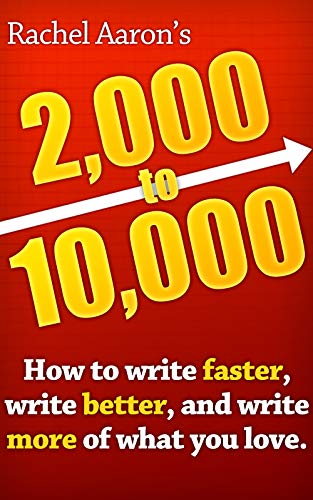
After blogging about writing more productively, Rachel went on to write a book about her method, 2000 to 10,000: How to Write Better, Write Faster, and Write More of What You Love, which you can buy on Amazon for Kindle at a very reasonable price.
Labels:
advice,
blogs,
books,
fiction,
good ideas,
observations,
writers,
writing
Sunday, March 14, 2021
I do an Interview about Magnetic Woman
Clifford Garstang has begun a wonderful series of short interviews with authors of new books, and I'm thrilled to say that he has included an interview with me about Magnetic Woman! Check it out--and be sure to take a look at his interviews with other authors as well. You'll probably see more than one book you'd like to read!
Clifford Garstang is the author of five works of fiction including the novels Oliver’s Travels and The Shaman of Turtle Valley and the short story collections House of the Ancients and Other Stories, What the Zhang Boys Know, and In an Uncharted Country. He is also the editor of the acclaimed anthology series, Everywhere Stories: Short Fiction from a Small Planet.
Saturday, July 18, 2020
Short Novels? Novellas? Unclassifiables?
One of the reasons I was lax about blogging during May and June was that--grades having been turned in at the start of May--I was busy writing a novella. At least, that's how I'm currently classifying it. The novel I wrote last summer-fall began as what I thought would be a novella but ended up as a shortish novel (66,000 words) but the spring project definitely stayed in what's generally considered to be novella range (27,000 words). It's set in the exact period I was living through--pandemic and protest--and I think it's at its correct length. It has now been submitted to a couple of novella contests and we'll see what happens (and if I find anywhere else appropriate to submit a piece of that length).
Meanwhile, I've discovered an interesting set of blog posts by Katherine Luck that consider what would constitute the shortest novel, versus constituting a novella or a short story or something else. She embarked on this topic as a result of having written what she supposes to be a novella, The Drowned Town, and her opening blog post is here, "What Is the Shortest Novel Ever Written?" She then considers the question in a more thematic way, focusing her posts on individual items that have been proposed to be very short novels.
She says:
In looking at Snoopy and “It was a Dark and Stormy Night”, she tackles medium and whether graphic novels and other visual forms can really be called novels. Here, I have to say that if we're wondering whether graphic novels are truly novels, it doesn't help to use a collection of "Peanuts" cartoons as the example, but I guess the book was marketed as a novel (why?).
Her analysis of The Comedian considers whether the age or literacy level of the intended audience makes any difference in calling a book a novel. With this one, which she finds satisfyingly novel-complex yet very short, the question arises as to how we differentiate novel from novella (and in word count, The Comedian is shorter than what most people would say constitutes a novella, let alone a novel!).
Moving on to Master of Miniatures, Luck considers the role of marketing in determining how a book is perceived. Here, in addition to looking at how Master of Miniatures was blurbed by its small press, she puts forth two opposing options for marketing the Danish band Týr's song “Ragnars Kvæði,” based on a traditional Faroese ballad about a seventh-century king. (I've gotta say that I'm immediately interested in any rock band that works with "a traditional Faroese ballad about a seventh-century king" whereas I don't have the slightest desire to hear "hardcore music of magic runes, merciless plunder, and jacked-up warriors in furs," but that's me and I'm not the typical reader.)
With Scars on the Soul, Luck examines the question of complexity and whether works that include memoir and/or autobiography--especially memoir, as it is more concentrated than autobiography--can be seen as novels. We know, of course, that many novels (and novellas, and short stories) are autobiographical to some extent, whether or not the author admits it. But since Luck is contemplating what makes a novel a novel, she asks "Is Scars on the Soul a novel? A memoir within a novel? A short story with autobiographical annotations?" and "Is it a single complex narrative, or a composite of two simple texts?" From a technical standpoint, these are great questions to ask. And now I really want to read Scars on the Soul! I read Françoise Sagan's first and most famous book, Bonjour Tristesse, in my teens but can't say I recall that much about it.
In her next installment, Luck deviates from her original list and goes to Koula by Menis Koumandareas to contemplate genre and whether that matters. But--(is this a spoiler? I don't think so) she decides Koula is neither genre fiction nor a novel. On to...
Literary fiction and I Lock my Door Upon Myself. Yeah, she's skipped some books on the original lineup. Well, these things develop. Here she says "Literary fiction breaks many of the publishing industry’s rules of genre novel writing. But is length the one rule that can’t be broken?" I Lock my Door Upon Myself is 23,000 words and Luck judges it a novel, without explaining why it is not a novella.
Next up is Too Loud a Solitude by Bohumil Hrabal. That post apparently hasn't appeared yet. Meanwhile, you can get a free copy of Luck's possible novella, The Drowned Town, at The Delve.
I don't feel any particular anxiety regarding whether my own novella is really a novella or a novel--it's definitely not a short story and I'm okay with using its length to define it--but I'm enjoying these moments of attempted categorization, probably because I kind of like reading Jan Mukařovský on structuralism and aesthetics. But don't let that scare you off reading what Luck has to say, just read her posts in order and they will be good fun.
Meanwhile, I've discovered an interesting set of blog posts by Katherine Luck that consider what would constitute the shortest novel, versus constituting a novella or a short story or something else. She embarked on this topic as a result of having written what she supposes to be a novella, The Drowned Town, and her opening blog post is here, "What Is the Shortest Novel Ever Written?" She then considers the question in a more thematic way, focusing her posts on individual items that have been proposed to be very short novels.
She says:
In the interest of classifying The Drowned Town correctly and helping all of us find out, once and for all, the difference between a short story, a novella, and a novel, I’ve put together my own list of extremely short books that claim to be novels. I’m going to read ‘em and report back to you. Here are the top ten contenders for shortest novel of all time:In discussing Wenjack, she considers the role of length, and whether Wenjack is really a novel or actually a short story.
Wenjack by Joseph Boyden
Snoopy and “It was a Dark and Stormy Night” by Charles M. Schulz
The Comedian by Joseph O’Connor
Master of Miniatures by Jim Shepard
Scars on the Soul by Françoise Sagan
Mr. Stone and the Knights Companion by V.S. Naipaul
The Circling Song by Nawal El Saadawi
I Lock my Door Upon Myself by Joyce Carol Oates
The Shawl by Cynthia Ozick
A Small Place by Jamaica Kinkaid
In looking at Snoopy and “It was a Dark and Stormy Night”, she tackles medium and whether graphic novels and other visual forms can really be called novels. Here, I have to say that if we're wondering whether graphic novels are truly novels, it doesn't help to use a collection of "Peanuts" cartoons as the example, but I guess the book was marketed as a novel (why?).
Her analysis of The Comedian considers whether the age or literacy level of the intended audience makes any difference in calling a book a novel. With this one, which she finds satisfyingly novel-complex yet very short, the question arises as to how we differentiate novel from novella (and in word count, The Comedian is shorter than what most people would say constitutes a novella, let alone a novel!).
Moving on to Master of Miniatures, Luck considers the role of marketing in determining how a book is perceived. Here, in addition to looking at how Master of Miniatures was blurbed by its small press, she puts forth two opposing options for marketing the Danish band Týr's song “Ragnars Kvæði,” based on a traditional Faroese ballad about a seventh-century king. (I've gotta say that I'm immediately interested in any rock band that works with "a traditional Faroese ballad about a seventh-century king" whereas I don't have the slightest desire to hear "hardcore music of magic runes, merciless plunder, and jacked-up warriors in furs," but that's me and I'm not the typical reader.)
With Scars on the Soul, Luck examines the question of complexity and whether works that include memoir and/or autobiography--especially memoir, as it is more concentrated than autobiography--can be seen as novels. We know, of course, that many novels (and novellas, and short stories) are autobiographical to some extent, whether or not the author admits it. But since Luck is contemplating what makes a novel a novel, she asks "Is Scars on the Soul a novel? A memoir within a novel? A short story with autobiographical annotations?" and "Is it a single complex narrative, or a composite of two simple texts?" From a technical standpoint, these are great questions to ask. And now I really want to read Scars on the Soul! I read Françoise Sagan's first and most famous book, Bonjour Tristesse, in my teens but can't say I recall that much about it.
In her next installment, Luck deviates from her original list and goes to Koula by Menis Koumandareas to contemplate genre and whether that matters. But--(is this a spoiler? I don't think so) she decides Koula is neither genre fiction nor a novel. On to...
Literary fiction and I Lock my Door Upon Myself. Yeah, she's skipped some books on the original lineup. Well, these things develop. Here she says "Literary fiction breaks many of the publishing industry’s rules of genre novel writing. But is length the one rule that can’t be broken?" I Lock my Door Upon Myself is 23,000 words and Luck judges it a novel, without explaining why it is not a novella.
Next up is Too Loud a Solitude by Bohumil Hrabal. That post apparently hasn't appeared yet. Meanwhile, you can get a free copy of Luck's possible novella, The Drowned Town, at The Delve.
I don't feel any particular anxiety regarding whether my own novella is really a novella or a novel--it's definitely not a short story and I'm okay with using its length to define it--but I'm enjoying these moments of attempted categorization, probably because I kind of like reading Jan Mukařovský on structuralism and aesthetics. But don't let that scare you off reading what Luck has to say, just read her posts in order and they will be good fun.
Subscribe to:
Posts (Atom)